The Road to CHRO/CPO: Career stories of People Leaders
Stijn Nauwelaerts, Chief People Officer at NTT DATA, a global leader in business and technology services, shares insights on CHRO leadership, people strategy, and the future of HR. Appointed in October 2024, Stijn leads NTT DATA’s global people and talent strategy for a workforce of 150,000+ across 50+ countries. Stijn brings 30 years of international HR leadership experience. He joined from Microsoft, where he served as Corporate Vice President HR, and earlier led HR at The Bank of New York in Brussels. He started his career as a legal counsel and holds Master’s degrees in Law and in Labor and Social Security Law.
When did you know you wanted to become a CHRO?
“I knew very early on that I wanted my professional life to have meaning and impact. Even as a student, I was deeply convinced that prosperity comes through growth, economic growth, and that organisations play a fundamental role in shaping that prosperity. What became clear to me early is that growth and success does not start with products or services – it starts with people. Strong cultures, strong leadership, and the ability to bring people together around a shared purpose are what ultimately drive sustainable success. I have always believed that the people agenda and the business agenda should move as one. That conviction has guided me since the very beginning of my career. Becoming a CHRO wasn’t a sudden ‘aha’ moment, it was a destination I was always moving toward.”
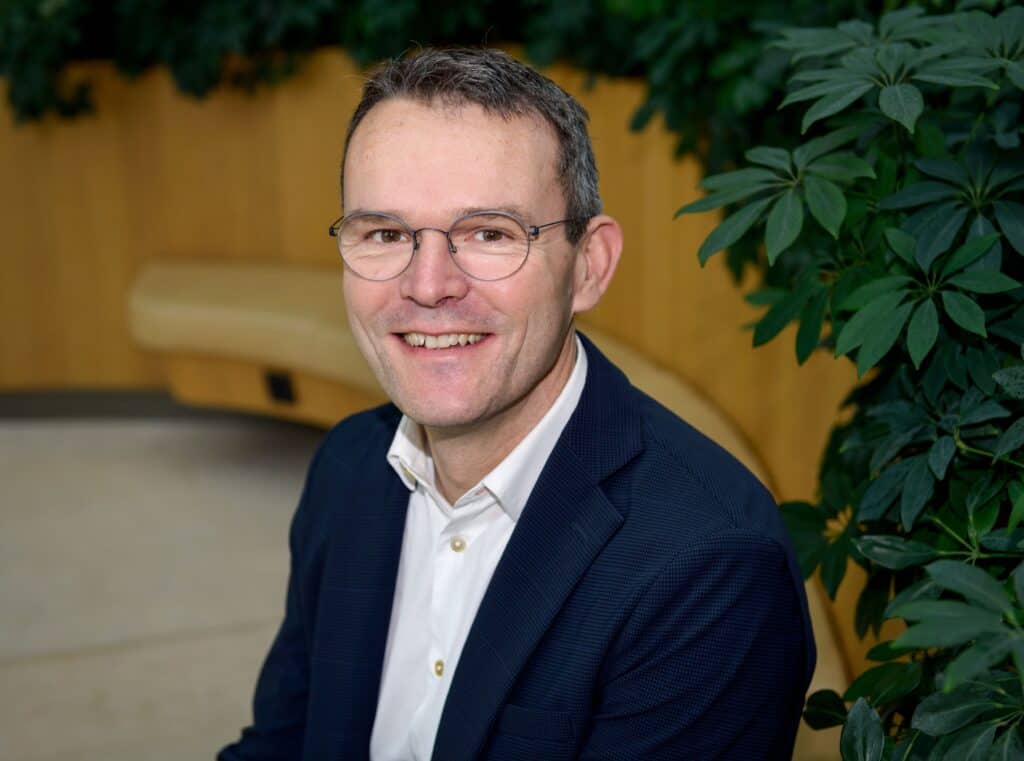
“Strong cultures, strong leadership, and the ability to bring people together around a shared purpose are what ultimately drive sustainable success.”
Who inspired your journey?
“Empathy and respect sit at the core of everything I do. I was fortunate to learn this early, both through mentors and through the people I worked alongside. Some of my most influential mentors were peers – people who helped reinforce the belief that leadership is about truly seeing people. Seeing people means respecting everyone equally, regardless of role or title – from the receptionist to the CEO. Everyone plays a part. That mindset grounded me from day one and has stayed with me throughout my career. I have also always been intentional about surrounding myself with people who inspire me, people I would want to work for, learn from, or be challenged by. Inspiration can come from your team, your peers, or even from someone you meet briefly. That curiosity about people has shaped how I lead.”
How do you balance empathy with tough decisions?
“Tough decisions are part of the role and empathy doesn’t mean avoiding them. For me, there are a few guiding principles. First, values matter. I choose to work with organisations and leaders whose values align with mine. If I can’t connect my purpose to the decisions we’re making, that’s a problem. Second, we must remember that companies are professional organisations – not families. We care deeply about people, but we also have a responsibility to ensure the organisation succeeds. Sometimes that requires difficult choices. And finally: clarity is kindness. Being vague or avoiding honesty helps no one. People deserve clarity, transparency, and respect. Empathy shows up not in avoiding decisions, but in how those decisions are communicated and lived.”
How do you manage your energy in such a visible role?
“I’m very intentional about energy management. I check in with myself at the start of each week and my goal is to finish the week with equal or higher energy than I started with. That means prioritising basics: sleep, exercise, nutrition. When those are out of balance, I feel it immediately. I’ve also learned to let go of worry. Worry is wasted energy. No one benefits from it. Surrounding yourself with strong people, trusting them, and not taking yourself too seriously makes a huge difference.”
“Worry is wasted energy. No one benefits from it. Surrounding yourself with strong people, trusting them, and not taking yourself too seriously makes a huge difference.”
How did you prepare for the CHRO role?
“In my view, HR leaders should be business leaders first – professionals who happen to operate in the people function. Preparing for the CHRO role meant staying relentlessly close to the business: understanding it deeply, speaking its language, and translating strategy into action. Learning has always been a constant for me. Every conversation is an opportunity to stretch my thinking. That curiosity has been one of my biggest drivers.
Looking back, there are two things I wish I’d done more of. First, I would have taken a business role at some point, owning P&L responsibility builds credibility and perspective. Second, I would have invested earlier in deep change and transformation capabilities. The combination of business acumen and change leadership is incredibly powerful for CHROs today.”
What capabilities will CHROs of the future need?
“The future CHRO must be a business leader, a change leader, and a technology‑savvy leader, all at once. Digital and technology acumen are no longer optional. Understanding how transformation works, how organisations evolve, and how technology reshapes work is critical. But beyond skills, mindset matters most. The ability to move seamlessly between strategy and execution – to roll up your sleeves when needed – builds credibility. CHROs must also develop a strong external perspective. Employees expect their leaders to understand what’s happening in the world – geopolitically, economically, socially – and to help make sense of uncertainty. That expectation will only grow.”
“Always be yourself. You can’t fake care, and authenticity matters more than perfection.”
What’s your no‑nonsense advice for future CHROs?
First: always be yourself. You can’t fake care, and authenticity matters more than perfection.
Second: don’t worry too much. Rejection or setbacks are rarely personal. Learn, move on, and keep going.
Third: perform, but also recover. CHROs must be energy carriers, not energy drains.
And finally, always ask yourself two questions:
- How can I create an environment where people can do their best work?
- How can I raise the bar beyond what we thought was possible without losing belonging?
That balance is the essence of leadership.
Interview by Joan Beets
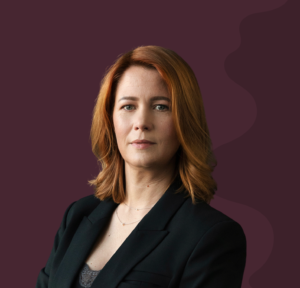 Joan Beets, in her global corporate career that spanned 15 years, worked across industries (Oil&Gas, Staffing, Food Ingredients) and functions (HRBP, Talent, Change Management and HR Strategy) for large multi-national organizations. Joan have opened and closed offices in Asia and Europe, led the development of a contingent workforce framework to support multi-year Engineering projects, drove the HR aspects of a business transformation of a Global IT organization, developed and implemented a Global Mobility strategy and led the change management process of the transfer of on-site HR services to a shared service model in Europe and North America (incl. roll out of a new SuccessFactors platform).