Where design meets reality:
The Science and Art of Change
Most transformations are well designed and still stall. Bas Zwart on what the organisation is telling you, why resistance is often useful data, and how to close the gap between a change that is announced and one that is adopted.
Science, art and where it breaks
You often talk about the science and art of change. What does that mean to you?
The science is everything we can make explicit, structure and test. What outcome are we trying to create? Which behaviours need to change? What assumptions are we making? How will we know whether it is working? Behavioural science, data and good change methodology help us answer those questions and bring rigour to the process.
Then that process meets people. Every organisation has its own history, relationships, culture and dynamics. People interpret change differently and do not respond according to a model. That is where the art comes in: you have to listen, read the context, understand the system in and around an organisation and know when to adapt. It is almost like dancing with the context. The method matters, but judgement matters just as much. For me, the lasting change always happens when you combine the two.
Where do well-designed transformations most often start to break down?
There is often a gap between the transformation that has been designed and the transformation the organisation actually experiences. The strategy can be clear, the operating model can look right and the technology can work. Then you start implementing and discover how the organisation really operates, above and especially below the surface. An incentive still rewards the old behaviour. A KPI does not work in practice. Two leaders have interpreted the new model differently. A manager is expected to advocate for a change they do not yet understand or can support themselves. That is the point where design meets reality, and it is the part I find most interesting. The question should not only be how we make people adopt this, but what the organisation is telling us about the change we designed.
You say the science is more than a method. What does it look like in practice?
I work with one loop: intervention, behaviour, indicator, outcome. Every intervention is designed to shift a specific behaviour. Every behaviour is tracked through an operating indicator. Every indicator is tied to the business outcome it is meant to move. If the behaviour does not shift, or the indicator does not move, that is a finding to design from, not a failure to explain away. What we learn feeds the next intervention, which is why I call it the Infinity Model. Here is an example from a large HR organisation. HR business partners spent much of their time on employee and labour relations questions, when we needed them on talent management. Two behaviours had to change: leaders had to raise those questions with HR Business Services first, and HRBPs had to let that work go. The second was harder, because it meant giving up work they were good at and drew their standing from. Our main indicator was the number of ER/LR requests still reaching the HRBPs. Since fewer requests can also mean leaders stopped asking, we tracked a second one: how well HR Business Services resolved what it received.
Here is a second example, from a global organisation where decisions kept travelling between global and regional level. Decision rights existed on paper, but in practice they were overridden or escalated, so launches slowed down. The behaviour that had to change was simple to state and hard to do: leaders had to decide at the agreed level and stop overriding or escalating. That means giving up control, on both sides. We tracked three indicators: the share of decisions made at the agreed level, the number of escalations, and decision cycle time.
“The point where the design meets reality, that’s where it gets interesting.”
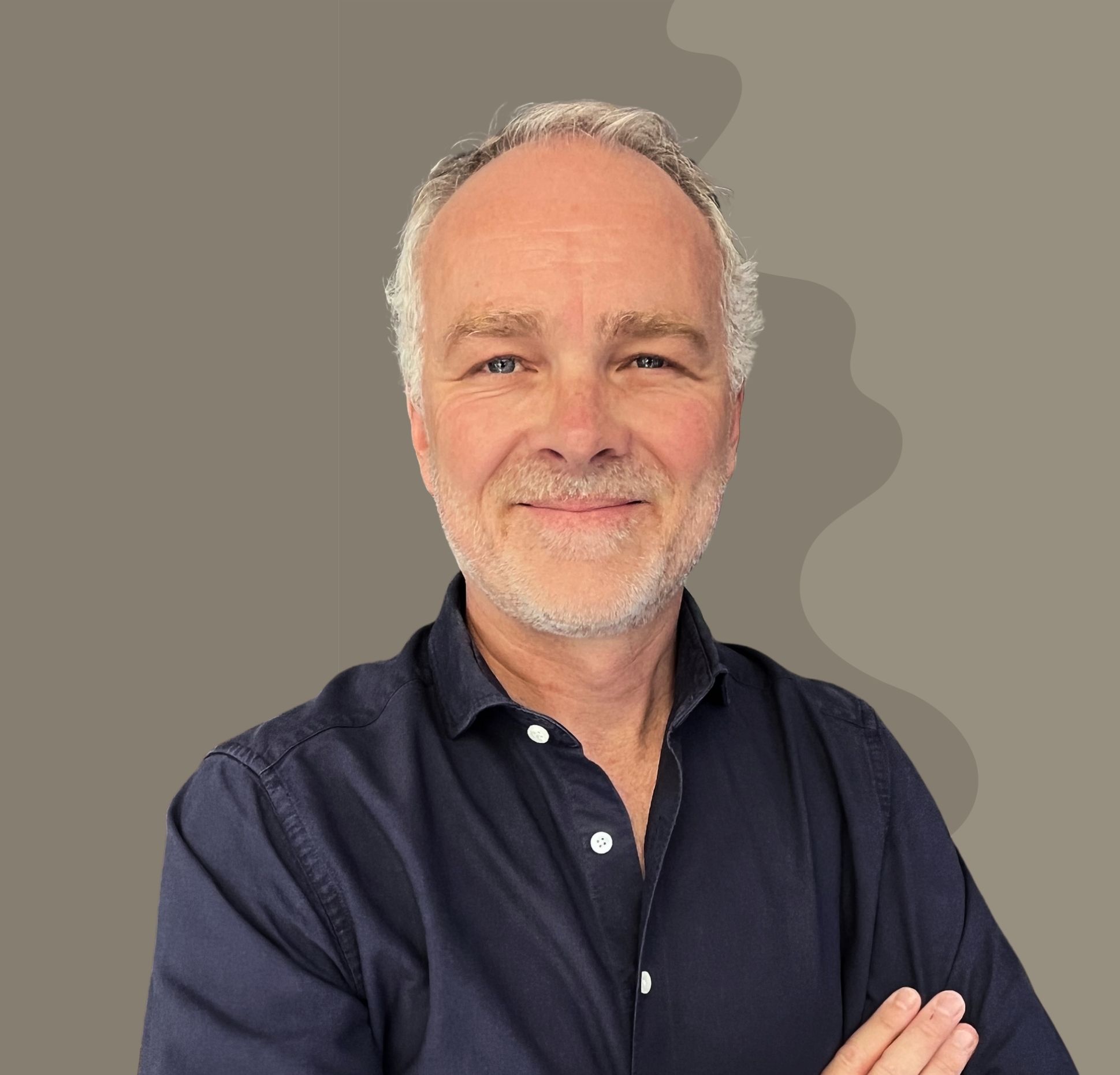
Bas Zwart recently joined KennedyFitch as Partner Change & Transformation. In twenty years of change work, nineteen of them at Johnson & Johnson, he moved from advising on change to running it as a global function.
He was HR Director for MedTech Benelux, HR EMEA post-merger integration lead for a $30bn healthcare acquisition and Global Head of Change Management, Communications & Training, leading more than 50 professionals. He also build a community of more than 750 leaders in change in Johnson & Johnson.
One deep belief runs through that career: lasting change needs the science and the art together. We asked him what that means, why well-designed transformations stall, what resistance can tell you, and how to turn a design into an outcome that holds.
“There is a big difference between delivering a change programme successfully and building an organisation that is good at change.”
Resistance, leaders and capability
That changes how you look at resistance.
I do not automatically see resistance as something to manage away. When someone tells me this will not work, I want to know why. What are they seeing that we are not? Which changes came before this one? I have sat in enough steering committees to know that silence does not mean agreement. I would rather surface disagreement early than discover the problem after we have scaled the solution.
Is all resistance useful?
Not all of it, and that is why I test it rather than assume. Some objections are testable claims about what will break: a process that cannot work, a KPI that rewards the wrong thing. Others are capability gaps: people who cannot yet do what is asked of them. And some is about loss: of status, control or a role people have built. That is not a design finding, but it is still information about what the change costs, and it needs an honest conversation.
Each needs a different response. The first goes back to the design owner as a finding, which is a deliverable and not a failure. The second needs skill-building. The third needs a conversation about what people are being asked to give up. In practice the three overlap, so I test the claim first and leave the motive aside. If we only communicate, we treat all three the same. Listen to understand is where it all starts.
You also talk about the space between old and new. Why does it matter?
Because introducing something new is only one side of change. People also have to let go of something: a familiar process, a role, a relationship, or the confidence of knowing how things work. Organisations spend a lot of time describing the future state, but people experience change from where they are today.
There is an in-between, often called the liminal phase, where the old way is disappearing and the new way is not yet established. Leaders need to recognise it. You need clarity about where you are going, but also trust and space for dialogue. It is also where new ideas start to arise, so it is important to stay connected. A strong sense of purpose and clear values give people something to navigate by when not everything is known.
Who has to carry a transformation?
The top table. Boards agree in words more often than in behaviour, and sponsorship is too easily delegated to HR or a programme office. I would rather have leaders disagree in a workshop than in public, six months in. So I ask for specific, dated commitments from the leadership team, not a general endorsement, and I test sponsor readiness before the moments that matter.
At Johnson & Johnson you moved from delivering change to building change capability. What did that teach you?
There is a big difference between delivering a change programme successfully and building an organisation that is good at change. You cannot create that capability through a central change team alone. Leaders need to understand their role. Managers need to be able to translate change for their teams. People need the confidence to challenge, experiment and learn. At the same time, you need enough common discipline that every transformation does not start from zero.
At J&J we built a global capability across change management, communications, learning and stakeholder management, together with a community of more than 750 leaders in change, a movement I call it. That community mattered because change cannot remain something specialists do to an organisation. The organisation itself has to become better at leading it to be able to adapt faster and better.
Many organisations run dozens of changes at once. Is more change management the answer?
Often the answer is fewer, better and smarter orchestrated changes. When everything is a priority, nothing sticks. Before adding another programme, look at the total change load on the same people and ask which initiatives compete for the same attention. A portfolio view, clear decision rights and measures of behaviour and value, not activity counts, let priorities compete on evidence instead of volume. That is the work of a change management office, and I have built one.

“I want the change and organisational questions at the table early enough to influence the outcome, not at the end to drive adoption.”
AI, KennedyFitch and where to start
AI is accelerating all of this. Does it change how organisations should approach transformation?
It makes the ability to change continuously much more important. A traditional transformation works towards a relatively defined future state. With AI, what is possible keeps developing, so the work, processes and roles around the technology keep adapting. It is not enough to ask whether people are adopting a new tool. What are we trying to achieve? Which work should change? Which behaviours need to change with it? Where does human judgement and moral responsibility remain essential?
I am not the technology expert in that conversation. But I want the change and organisational questions at the table early enough to influence the outcome, not at the end to drive adoption.
Where is the strongest link between change and the wider work of KennedyFitch?
Change does not sit on its own. Our clients are making choices about strategy, operating model, organisation, leadership, culture and capability, and all of them have to turn into a different way of working. A transformation is only as strong as the leaders who carry it. KennedyFitch works on who those leaders are, how they work as a team and how they are developed. I can add the question of whether the organisation around them will behave differently. Often the right person is in the right seat and the design still fails, because incentives and decision rights pull the other way. And sometimes the design is fine and the sponsor team is not aligned yet.
For me that shows up at three moments. Before the design is locked, I stress-test the operating model or integration blueprint against the people who will have to run it. Before go-live, I separate the objections that point to something that will break from the ones that are capability gaps. And when adoption has gone flat, I help work out whether you have a people problem or a design problem, and build the response to whichever it is.
What is the measure of good change work?
Not how much activity we delivered, but whether the organisation works differently and whether that difference creates the outcome we set out to achieve. I want to close the gap between the transformation an organisation designed and the one that takes hold.
Want to learn more about my view and ways of working on Change & Transformation? Or learn more about the Science and Art and how we can help your organization?
Get in touch with Bas Zwart