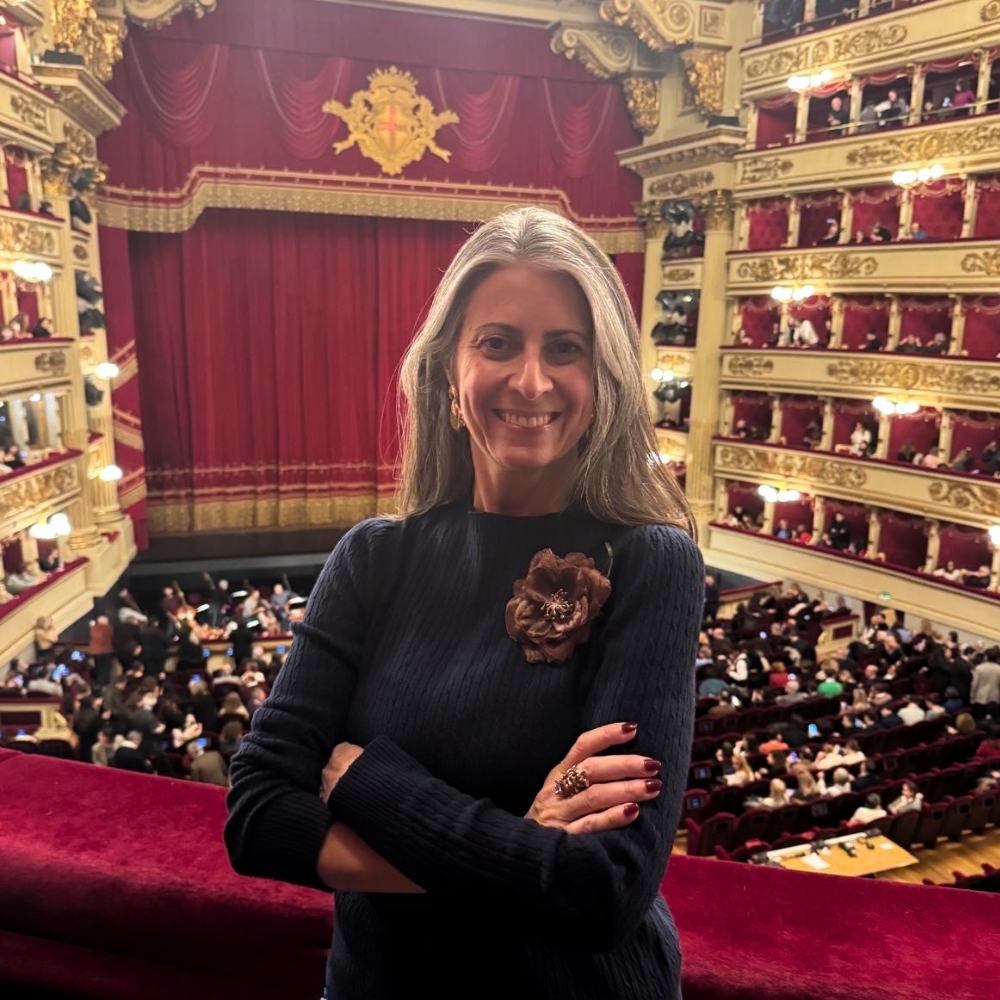
We sat down with Dalila Dabbicco a few months after she joined KennedyFitch in October. She has spent years close to Executive Committees and Boards, helping turn strategy into results while leading teams through complex change.
What makes her perspective even more distinctive is how it blends years inside global corporations with a lifelong connection to music.
In this interview, Dalila talks about leadership as orchestration: setting the tempo, cutting through noise, and helping leaders really hear one another so decisions move and teams perform. She also shares what it takes to create traction early, especially when context is shifting and the stakes are high.
What drew you to KennedyFitch at this point in your career?
Joining KennedyFitch felt like a very natural step. Here we combine rigorous executive search with thoughtful leadership advisory. Close to the business, and close to the people who are ready to move forward.
Having spent many years in international organisations building teams, developing talent, and steering both technological and cultural change, I’ve seen how leadership choices shape execution, culture and value creation. That experience is why, after years at the intersection of HR, strategy and transformation, I’m drawn to partnering with clients in the moments that matter: transitions, inflection points, transformations. And helping leaders land well, gain traction early and set the organisation up for success.
That is where this work has real impact, and that is exactly how we show up at KennedyFitch.
How would you describe your approach when a client asks for help with a critical leadership decision?
I start by getting clarity on outcomes: what would success look like in practice, not in slogans.
From there, I look at the system around the role: strategy, culture, operating model, stakeholders, and timing. The brief is rarely just the job description. The work is to translate what the organisation needs next into a leadership profile that is specific, testable, and aligned.
What distinguishes a strong search partner today, especially as data and AI become more prominent?
Curiosity, context, collaboration and courage. Data and AI raise the baseline. They can sharpen the brief, widen the lens, and help test assumptions. But human judgment raises the ceiling. It is still the advisor’s role to read context, sense trajectory, and create the level of trust that allows an organisation to make a high stakes decision well. The best search partners do not just present candidates. They help improve the decision, and they stay accountable to the impact that decision needs to create.
You describe leadership as orchestration, influenced by music and opera. What does that mean in practice?
My view comes from music. A conductor sets tempo, reduces noise, and helps leaders hear one another and complement each other. The goal is not a solo performance, it is a shared result. In organisations, especially during change, leadership is often about coordination and trust: aligning priorities, making decisions move, and creating the conditions where strong people can do their best work together. Opera also reinforces that timing matters, and that preparation, discipline and presence are part of performance, not separate from it.
At Executive Committee and Board level, what is the biggest challenge and opportunity in aligning talent with business priorities, and what should clients focus on first?
The biggest challenge is timing. Strategy, talent and culture often move at different speeds, and misalignment shows up as delayed execution or repeated rework. The opportunity is to anchor leadership decisions in the value agenda and the time horizon. Three questions help create that clarity:
- What value must this leader create in the next 18 to 24 months?
- Which capabilities are truly non negotiable, and which can be developed in role?
- How will we de-risk the transition, so expectations are clear and early traction is visible?
When those questions are answered well, the search becomes sharper, the decision becomes faster, and the transition is treated as an accelerator.
How has working across Europe, the United States, and Asia shaped your view of leadership, culture, and diversity?
It has reinforced a simple truth: performance travels, context does not. Outcomes can move across borders, but the conditions for success change, and leaders must read and adapt to them. Cultural fluency is a leadership skill. Leaders who listen first, understand how trust is built in that context, and adapt their approach earn followership and build teams where people feel safe and able to contribute. To make diversity a strategic advantage, organisations need to design for it: build inclusive decision practices, measure decision quality and speed, and reward outcomes created through different perspectives. When it is wired into how choices are made, it becomes an engine for growth, not a statement.
What advice would you give emerging leaders, and what excites you most about this chapter at KennedyFitch?
Know what grounds you, and keep evolving your playbook. Authenticity without learning becomes rigidity. Adaptability without values loses direction. Leadership today needs both. What excites me most at KennedyFitch is partnering with clients on leadership choices that compound over time. I value being present before, during and after decisive moments, supporting both the decision and the conditions for success that follow. If an organisation is approaching a critical transition, I am glad to listen first and explore how we can help.
For organisations facing leadership transitions or moments of strategic change, Dalila is always open to a conversation about how the right leadership choices can bring clarity, traction, and results.
Get in touch with Dalila Dabbicco